Flat Lay Apparel Photography: Styling and the AI Upgrade
By Can Bayrak, Founder, Kayrae.ai
See also: Flat lay photography: the complete guide
Flat lay apparel photography is the practice of arranging clothing flat on a surface and photographing it from directly above. The result shows the garment's shape, print, color, and construction in a single image without a model. It's the fastest, lowest-cost method for apparel content production, widely used for catalog shoots, social media, and marketplace listings. The primary limitation is that flat lay doesn't communicate fit or drape on a body, which is where on-model imagery (increasingly generated by AI) complements or replaces it.
TL;DR: Flat Lay Apparel Photography
- Flat lay is fast, consistent, and cost-effective for high-volume apparel catalogs.
- The styling (shape, lay, props, color) determines conversion quality more than the photography itself.
- On-model images convert 20-30% higher than flat lay for fit-dependent categories.
- The strongest catalogs use flat lay for volume and on-model for conversion-critical SKUs.
- AI tools like Kayrae let you generate on-model imagery directly from your flat lay, without a separate shoot.
Flat lay works. That's the reason it's survived every trend cycle in ecommerce content production.
It's fast to set up, cheap to produce, requires no model bookings, and delivers clean, consistent imagery that performs well on marketplace listings and social feeds alike. For apparel brands managing high SKU volume, it's often the only format that scales without breaking the content budget.
The question isn't whether flat lay is useful. It's whether flat lay alone is enough, and if not, how to bridge the gap without a full studio shoot for every product.
Why Flat Lay Works Well for Apparel
The advantages of flat lay are structural, not just practical.
- Control. On a flat surface, you control everything: garment placement, wrinkle management, prop positioning, and background selection. There are no unplanned expressions, no awkward model posture, no wind catching a hem at the wrong moment.
- Speed. A competent flat lay shoot can process 15-20 SKUs per hour with a single photographer and a basic lighting setup. That's catalog-scale output that an on-model shoot can't match at comparable cost.
- Consistency. Because the variables are minimal, flat lay imagery is easier to standardize across a large catalog. Same overhead angle, same background, same lighting ratio, same styling approach. Buyers browsing a 200-item catalog see a coherent brand rather than a patchwork of different production qualities.
- Cost. No model fees, no stylist required, no studio rental. A competent flat lay setup costs a fraction of a fully booked shoot day and can be run in-house by a single team member.
For basics, accessories, folded knitwear, prints, and any product where the design is the primary selling point, flat lay is often the right primary format.
Styling a Flat Lay for Apparel: Shape, Lay, Props, Color
The difference between a flat lay that converts and one that doesn't is usually in the styling, not the photography.
Shape
Clothing is three-dimensional. Laid flat, it loses structure. Your job in styling is to restore implied volume.
For tops and jackets, fold sleeves slightly outward and away from the body rather than flat. For trousers, give the legs a slight outward angle so the garment reads as dimensional rather than collapsed. For dresses, fan the hem and use tissue paper or light padding inside structured areas to fill them out.
The Lay
Centered and symmetrical works for most catalog shots. For editorial flat lay, an asymmetric or dynamic arrangement is more engaging but requires more precision.
Whatever approach you choose, be consistent: every image in a catalog should follow the same compositional rules so the grid reads as deliberate rather than random.
Props
Props should support the garment's context without competing with it. A linen shirt photographed with a ceramic cup and some greenery reads as relaxed and weekend-appropriate. A tailored blazer with a notebook and a watch reads as professional.
Keep props minimal and on-brand. When in doubt, remove the prop. A clean garment on a clean surface is almost always more effective than a cluttered one.
Color
Your background color should either contrast with the garment (a warm white under navy works, white under ivory doesn't) or complement it within your brand palette. Avoid backgrounds that merge with the garment's dominant color. The garment should read as distinct from its surface immediately and from a thumbnail.
Lighting Setup for Flat Lay Apparel
Flat lay photography is shot from above, which means your lighting setup has to work in the same plane as the shot.
Natural Light
The simplest and often best setup for flat lay. Place your surface near a large window, out of direct sunlight. Overcast days are ideal: the clouds act as a diffuser and eliminate harsh shadows. Shoot between 9am and 2pm for consistent light quality.
Use a white foam board on the opposite side of the window to bounce light back and fill any shadows.
Artificial Light
For consistent indoor production without depending on daylight hours, use one or two LED panels or softboxes placed at 45-degree angles to the flat lay surface. The goal is even, diffused light with no hard shadows.
Avoid direct overhead flash, which creates flat, commercial-looking imagery with no depth.
What to Avoid
Harsh directional light creates deep shadows in fabric folds that make garments look low-quality. Mixed light sources (daylight plus tungsten) create color casts that require significant correction in post. Shoot in one consistent light quality and white-balance to that source.
Generate your first on-model image today. Plans start at $19/mo. View pricing
The Limitation: Flat Lay vs On-Model Conversion Rates
Here's the honest problem with flat lay as your primary format for fashion ecommerce: it doesn't show how the garment fits.
Buyers purchasing clothing online are making a risk decision. They're committing to a return process if the fit is wrong. Flat lay imagery doesn't help them assess that risk. They can see the print, the color, the general shape. They can't see whether the shoulder seam hits correctly, how the waist falls, or how much the fabric moves with the body.
On-model imagery consistently outperforms flat lay on conversion for apparel categories. The gap is significant on garments where fit is a primary decision factor: fitted tops, tailored trousers, dresses, outerwear. For basics and accessories, the gap is smaller but still present.
For most fashion brands, the ideal catalog uses flat lay for speed and cost efficiency across the full SKU range, then prioritizes on-model imagery for hero SKUs and high-margin items. The challenge is producing on-model imagery without the overhead of a shoot day every time a new product goes live.
The AI Upgrade: Turning Your Flat Lay into On-Model Imagery
This is where the equation shifts.
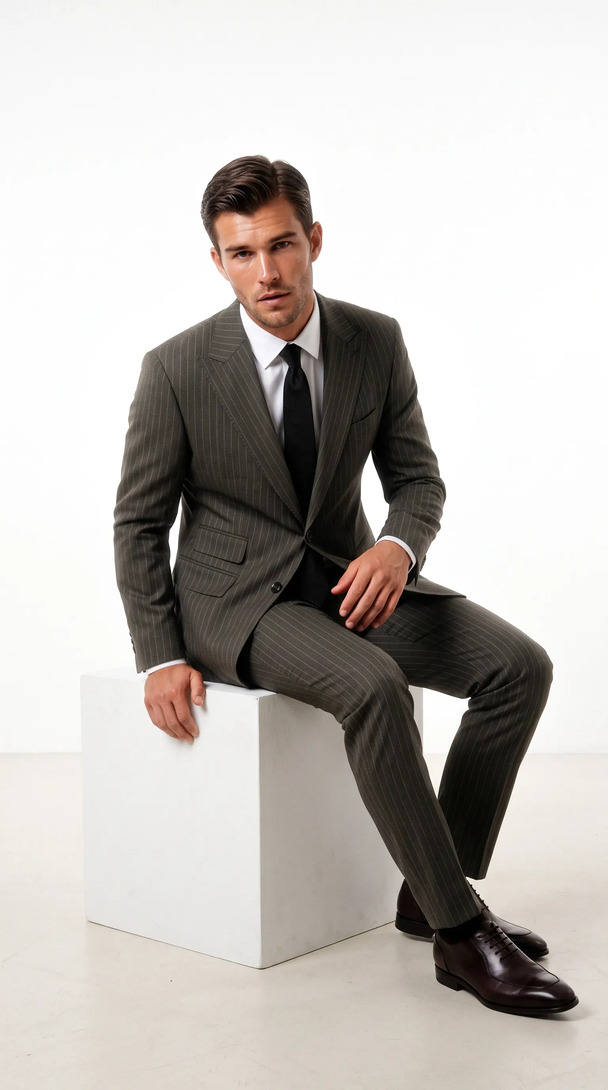
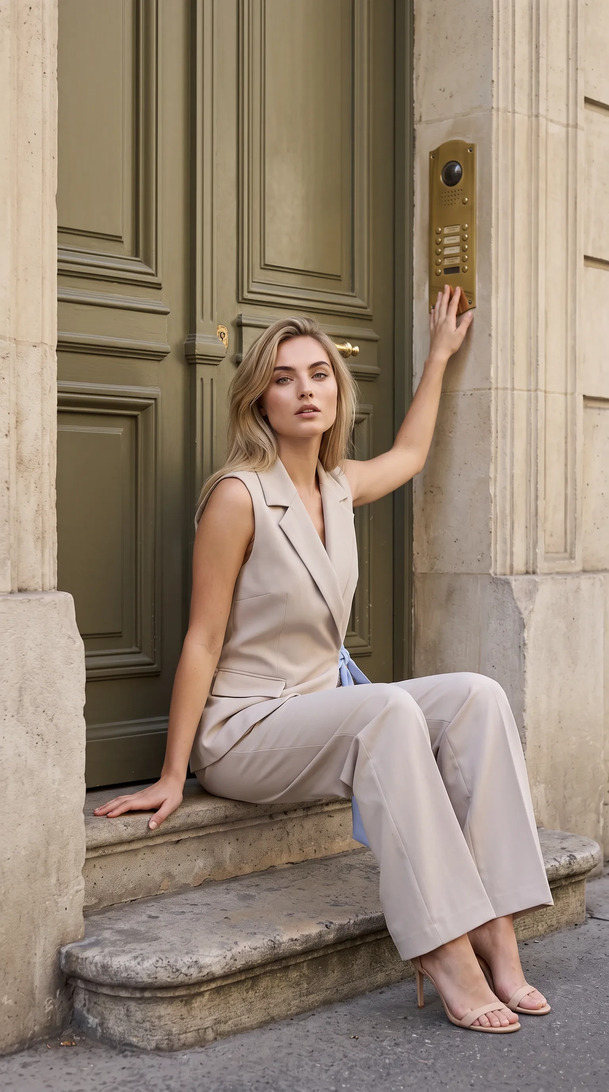
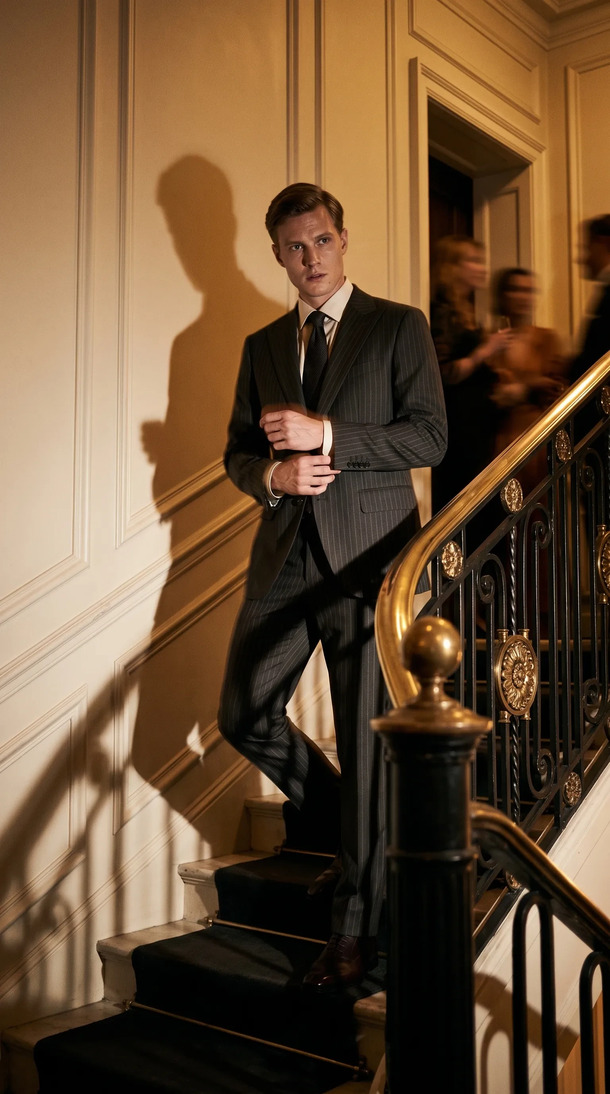
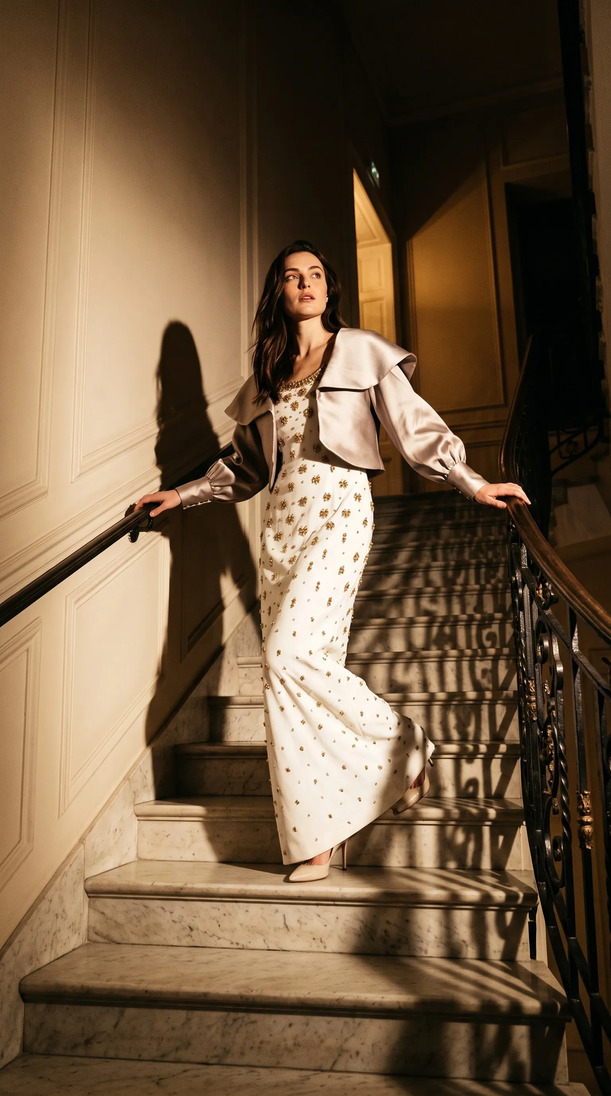
Kayrae on-model generation takes your flat lay as input and outputs studio-grade on-model imagery without a shoot day. Kayrae runs 40x faster than a traditional shoot, making it possible to produce on-model imagery at flat lay speed. Upload the garment, and Kayrae handles the rest: no prompt wrangling, no technical configuration.
The platform generates on-model shots using 140+ AI models across diverse body types, skin tones, poses, and heights. Brand kit consistency ensures that every generated image uses your established palette, your model selection, and your shoot reference history. Identity lock maintains the same model across scenes so your catalog reads as coherent, not assembled from different sources.
Edits are inline: "change the background to white," "remove the necklace," done in seconds. Auto-export delivers every ratio you need (1:1 for Shopify, 9:16 for TikTok, 16:9 for Meta) without a separate formatting step.
For brands currently running flat lay as their only format, the workflow becomes: shoot flat lays at scale (fast, cheap, controllable), then use Kayrae to generate on-model variants for the SKUs that need them. The result is on-model imagery at flat lay cost and speed.
Norda Tekstil ships whole catalogs in a day. Kingbrich cut imagery costs by 70%. Orchard & Co. replaced a three-person content team and a studio day. Plans start at Starter ($19/mo), with Pro from $43/mo being the most-picked tier for brands producing at catalog scale. See full pricing.
Across the platform, brands have generated 48,000+ on-model images to date, with average delivery in roughly 30 seconds per garment.
Sources
- On-model imagery converts 20-30% higher than flat lay (Pixelphant, 2024)
About Kayrae
Kayrae is an AI on-model product photography and video platform for fashion and e-commerce brands. The platform generates studio-grade on-model imagery from flat lay uploads in seconds, with 140+ AI models, brand kit consistency, identity lock, video generation (5-15s social clips), and auto-export for Shopify, Trendyol, Meta, TikTok, and Instagram.
- Platform: kayrae.ai
- Product: kayrae.ai/products
- Pricing: kayrae.ai/pricing (Starter $19/mo, Pro from $43/mo, Studio from $80/mo, Enterprise custom)
- Founder: Can Bayrak
FAQ
Is flat lay photography good enough for selling apparel online? For some categories, yes. Flat lay performs well for accessories, basics, prints, and products where design is the primary selling point. For fit-dependent categories like tailoring, fitted tops, and dresses, on-model imagery converts significantly better. The strongest catalogs use flat lay for speed and volume, and on-model imagery for conversion-critical SKUs.
What surface works best for flat lay apparel photography? A matte white or light grey surface (foam board, seamless paper, or a painted plywood sheet) is the most versatile. Avoid glossy surfaces that create reflections. Textured surfaces (linen, marble, wood) work for styled flat lay but should be chosen deliberately to complement, not compete with, the garment.
How do I keep flat lay apparel shots consistent across a large catalog? Standardize your setup: same camera angle (directly overhead), same distance from the surface, same lighting arrangement, and same background. Create a shot brief with reference images and use it for every session. For AI-generated content, Kayrae's brand kit stores these parameters automatically.
Can I use my flat lay photos to generate on-model imagery with AI? Yes. Kayrae takes your flat lay as the input and produces studio-grade on-model shots as the output. No additional photography is required. The AI handles garment placement, model selection, background, and lighting. Your flat lay becomes the production asset that drives everything else.
Turn your flat lay catalog into on-model imagery without a shoot day. Book a demo with Kayrae.