Flat Lay Clothing Photography: Setup and the AI Shortcut
By Can Bayrak, Founder, Kayrae.ai
See also: Flat lay photography: the complete guide
Flat lay clothing photography is the process of arranging garments on a flat surface and photographing them from a directly overhead angle. It's a controlled, cost-effective format for capturing shape, color, and construction without a model. Used across ecommerce listings, lookbooks, and social media, it's one of the most scalable formats in fashion content production. With AI tools, brands can now turn flat lays into on-model shots with Kayrae, adding the conversion power of on-model imagery without a separate shoot.
TL;DR: Flat Lay Clothing Photography
- Flat lay quality lives or dies on surface, camera angle, and lighting: get these three right first.
- Steam every garment before shooting, no exceptions: creases that look passable in person are amplified under photography lighting.
- 93% of shoppers say product photos influence purchase decisions, so flat lays that look unprofessional actively cost you sales.
- On-model imagery outperforms flat lay for fit-dependent categories; knowing when to use which format is key.
- Kayrae converts flat lays into studio-grade on-model imagery without a shoot day, model, or photographer.
Flat lay clothing photography is one of those formats that looks simple until you do it badly. A wrinkled shirt on a grey table, shot from six degrees off-vertical with inconsistent lighting, doesn't just underperform. It actively communicates that the brand doesn't care about its own product.
Done well, flat lay is fast, scalable, and capable of producing clean catalog imagery that holds up across every channel. Done poorly, it's the reason buyers scroll past without clicking.
This is the setup guide. And at the end, the shortcut that skips the shot entirely for on-model results.
Setup: Surface, Background, Camera Angle
The three elements that define a flat lay before the camera shutter opens are surface, background, and angle. Getting these right first saves everything downstream.
Surface
Your shooting surface needs to be rigid, flat, and large enough to accommodate the garment without crowding. A 4x4 foot foam board, a sheet of seamless paper roll, or a painted plywood panel all work. Whatever you choose, it needs to be matte.
Glossy surfaces (acrylic, laminate) create reflections that introduce color casts and distracting highlights that no amount of post-production fully removes.
For most catalog work, white or a light neutral is the right default. It's channel-agnostic: marketplace-compliant, clean on a Shopify grid, and usable as a starting point for background replacement. If you're shooting editorial or branded flat lay, introduce surface texture deliberately (linen, stone, wood) but keep it subordinate to the garment. The surface should read as context, not competition.
Background
In flat lay, the background and the surface are usually the same thing. The question is whether you're creating the background in-camera (by shooting on the actual surface) or removing and replacing it in post.
For brands doing high-volume catalog work, removing in post is often faster: shoot on a consistent green or white surface, batch remove in Photoshop or a dedicated background removal tool, and apply the final background uniformly across the batch.
Camera Angle
Flat lay means overhead. Not "mostly overhead" or "a slight angle that shows some depth." The camera should be mounted directly above the garment on a right-angle bracket or boom arm, pointing straight down.
Any deviation from 90 degrees introduces distortion and inconsistency that becomes very visible when images are placed side by side in a catalog grid. Use a tripod with an adjustable center column or a dedicated overhead photography stand. Shooting handheld from above is one of the most common sources of inconsistency in flat lay catalogs. Eliminate the variable.
Lighting for Clothing Flat Lays: Natural vs Artificial
Lighting for flat lay photography has one goal: even, shadow-free illumination across the entire garment. Directional light that works beautifully for on-model portraits creates problems in flat lay because wrinkles and folds become exaggerated, and one side of the garment can look significantly darker than the other.
Natural Light
The most accessible and often the best option when done correctly. Position your flat lay surface near a large window. North-facing windows provide consistent indirect light throughout the day without direct sun. Overcast conditions are ideal: cloud cover acts as a giant softbox, diffusing the light evenly.
Place a white foam board reflector on the side opposite the window to bounce light back into any shadows. Keep the surface parallel to the floor so the overhead camera angle doesn't shift relative to the light as you move around the setup.
Natural light has one limitation: it changes. Color temperature shifts from morning to afternoon, and clouds move. For high-volume catalog shooting where color accuracy across hundreds of SKUs matters, natural light requires careful management.
Artificial Light
LED panels or continuous softboxes on either side of the shooting surface at 45-degree angles give you the most control. Two equal-power lights on either side of the frame, positioned at the same height and distance, produce even illumination with minimal shadow. A third fill light directly above (if ceiling height allows) eliminates any remaining shadow in the center of the frame.
The advantage of artificial light is repeatability. The same setup on day one produces the same result on day 90. For catalogs where consistency across a full season is a requirement, that repeatability is worth the upfront equipment cost.
What to Avoid
Overhead room lighting as your primary source creates uneven exposure across the frame, color casts from non-daylight-balanced bulbs, and a flat, institutional look that doesn't serve fashion brands.
Styling Tips Specific to Clothing
Clothing presents specific styling challenges that other product categories don't share.
- Wrinkles. Steam everything before the shoot. No exceptions. Even garments that look passable in person show every crease under photography lighting. Work top to bottom with a handheld steamer, let the fabric cool completely, then style immediately. Re-steam if the garment sits for more than 20 minutes before shooting.
- Shape. Flat clothing loses its three-dimensional structure. For tops, fold sleeves outward at a slight angle away from the body. For trousers, spread the legs to create a V-shape rather than leaving them parallel and flat. For dresses and skirts, fan the hem outward so it reads as full rather than collapsed. For structured pieces (blazers, coats), use tissue paper or light batting inside the chest to fill out the silhouette.
- Symmetry. Most catalog flat lays benefit from bilateral symmetry: both sleeves at matching angles, collar centered, hem straight. A slight asymmetry can work for editorial purposes but requires deliberate execution. Accidental asymmetry just looks careless.
- Details. Buttons should be fastened (or deliberately open as a styling choice, not an oversight). Zippers up or down consistently across every image. Tags removed or tucked. Any drawstrings, ties, or closures should be styled intentionally: knotted and placed, not dangling randomly.
- Fold strategy. When garments can't be shown full-length due to surface size, fold them carefully and consistently. The fold should be clean, parallel to the frame edges, and applied the same way across every SKU in that category.
Generate your first on-model image today. Plans start at $19/mo. View pricing
When Flat Lay Is Enough (and When It Isn't)
Flat lay clothing photography is the right primary format when:
- The product's selling point is its design, print, color, or pattern
- The garment category doesn't require fit context (scarves, hats, bags, accessories)
- You're producing at high volume and need consistent output quickly
- The channel is a marketplace with strict background requirements
Flat lay is not enough when:
- The garment's fit is its primary value proposition (tailoring, fitted silhouettes, activewear)
- The buyer's main uncertainty is "will this look good on me"
- You're competing in a category where on-model imagery is the standard
- Your paid social creative needs to stop a scroll
In those cases, on-model imagery is the conversion tool. The question is how to produce it efficiently enough to use across a full catalog.
The AI Shortcut: From Clothing Flat Lay to On-Model in Seconds
You don't need to choose between flat lay speed and on-model conversion. You can have both.
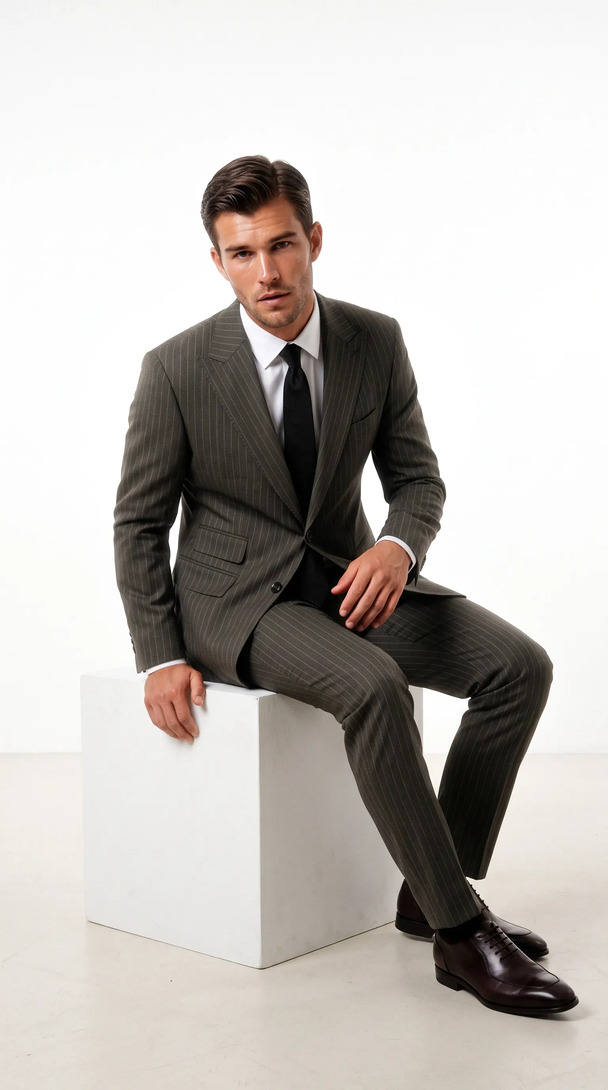
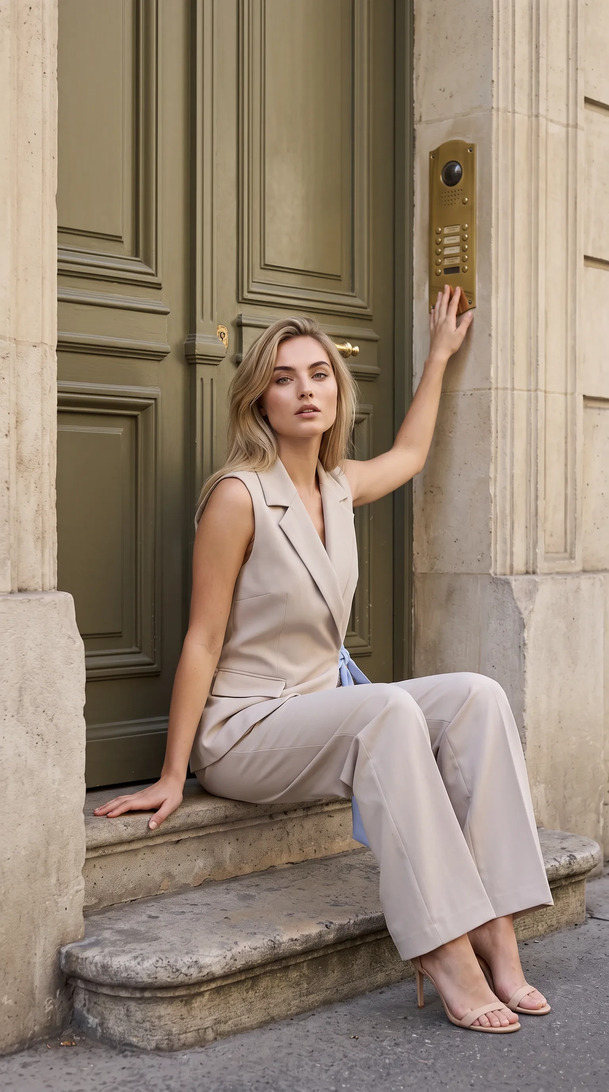
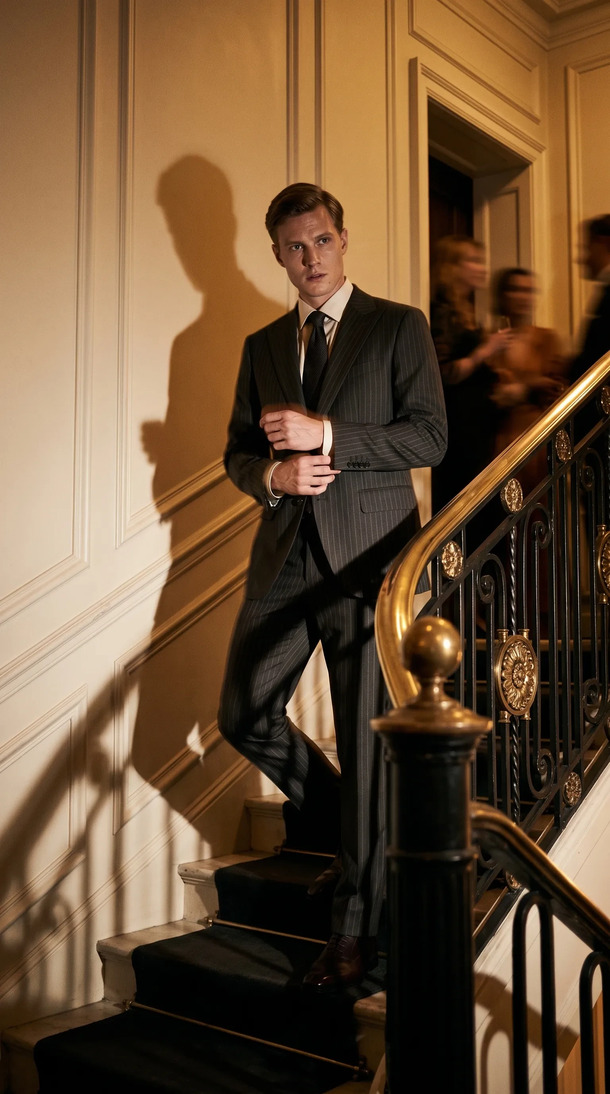
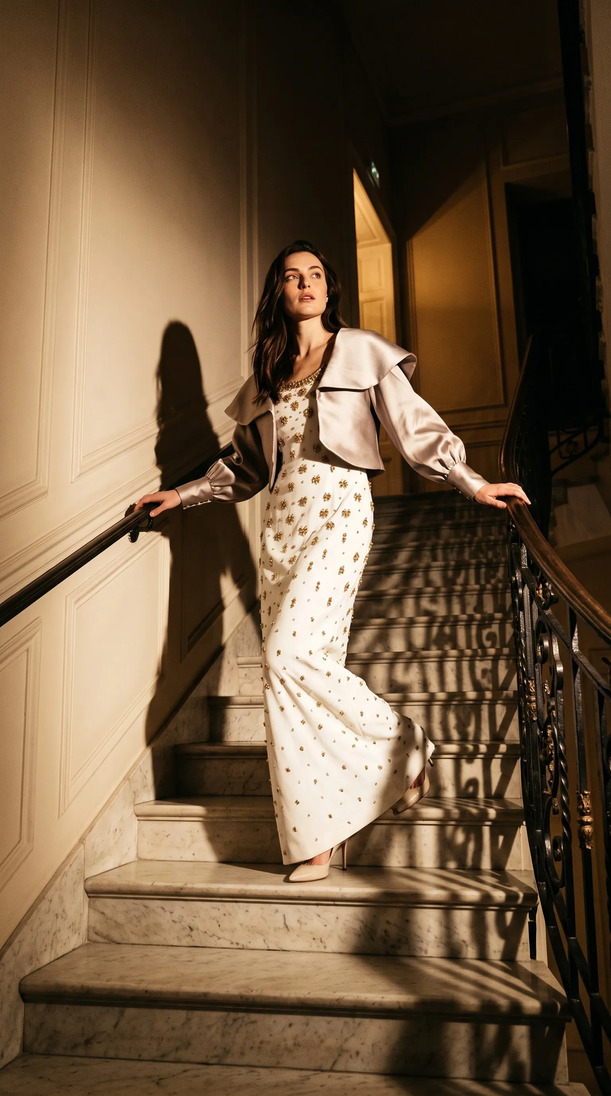
Turn flat lays into on-model shots with Kayrae: upload your flat lay, and the platform outputs studio-grade on-model imagery without a shoot day, a model booking, or a photographer. No prompts to write. No technical configuration. Flat lay in, on-model out, ready in seconds.
Kayrae draws on 140+ AI models across body types, skin tones, and poses. Brand kit consistency means every generated image matches your established palette, shoot reference history, and model identity. Identity lock ensures the same model appears across your entire campaign.
Edit inline ("remove the necklace," "change background to sand white") and the change applies in about two seconds. For channel delivery, auto-export produces every ratio in one session: 1:1 for Shopify and Trendyol, 9:16 for TikTok and Stories, 16:9 for Meta and display. No manual cropping, no reformatting, no separate design step.
This is 40x faster than a studio shoot at roughly a third of the cost. Brands on the Pro plan (from $43/mo, the most-picked tier) get catalog-scale on-model output without the catalog-scale production budget. Starter is $19/mo, Studio is from $80/mo for agencies, and Enterprise pricing is custom. See full pricing.
Norda Tekstil ships whole catalogs in a single day. Kingbrich cut imagery costs by 70% while achieving ultra-realistic on-model results. Orchard & Co. replaced a three-person content team and a studio day.
Across the platform, brands have generated 48,000+ on-model images to date, with average delivery in roughly 30 seconds per garment.
Sources
About Kayrae
Kayrae is an AI on-model product photography and video platform for fashion and e-commerce brands. The platform generates studio-grade on-model imagery from flat lay uploads in seconds, with 140+ AI models, brand kit consistency, identity lock, video generation (5-15s social clips), and auto-export for Shopify, Trendyol, Meta, TikTok, and Instagram.
- Platform: kayrae.ai
- Product: kayrae.ai/products
- Pricing: kayrae.ai/pricing (Starter $19/mo, Pro from $43/mo, Studio from $80/mo, Enterprise custom)
- Founder: Can Bayrak
FAQ
What camera settings should I use for flat lay clothing photography? Shoot in Aperture Priority or Manual. Use f/8 to keep the entire garment in sharp focus (a shallow depth of field that works for portraits creates focus fall-off in flat lay). Set ISO as low as possible (100-200) to minimize noise. Use a remote shutter release or self-timer to eliminate camera shake from the overhead position.
How do I prevent shadows in flat lay clothing photography? Use two equal-power light sources on either side of the frame, or shoot in diffused natural light from a large window with a reflector opposite. Avoid single-source lighting for flat lay. Hard single-source light creates directional shadows across fabric folds that are difficult to remove in post without losing garment texture detail.
What is the best background for flat lay clothing photography? For marketplace and catalog use, white or very light grey seamless paper or foam board. For editorial or branded content, choose a surface texture that complements the garment (linen for casual, marble for premium) without competing with it. The garment should always read as the dominant visual element at thumbnail size.
How do I go from flat lay to on-model imagery without a full shoot? Upload your flat lay to Kayrae. The platform generates studio-grade on-model imagery from your flat lay input, using AI models that match your brand specification. No additional photography is required. The flat lay becomes the input asset; Kayrae produces the on-model output. Plans start at $19/mo.
Get on-model results from your flat lays, without a shoot day. Book a demo with Kayrae.