What Is AI Product Photography? How It Works in 2026
See also: AI fashion model generator: on-model imagery from a flat lay
TL;DR: What Is AI Product Photography
- AI product photography generates commercial-grade product images from an existing flat lay or packshot, without a studio shoot.
- The process involves four stages: segmentation, scene understanding, generation, and post-processing export.
- AI product photography is 40x faster than a traditional studio and costs 1/3 as much.
- On-model imagery converts 20-30% higher than flat lay, making the upgrade from catalog shots a direct revenue lever.
- Kayrae is purpose-built for fashion brands that need this at catalog scale with consistent brand identity across every image.
What Is AI Product Photography?
AI product photography is the use of generative artificial intelligence to produce commercial-grade product images without a traditional photo shoot. The process takes an existing product image (a flat lay, packshot, or sample photo) as input, and AI generates the output: a studio-quality image with the product on a model, in a lifestyle setting, or against a custom background.
In fashion and e-commerce, AI product photography replaces the studio booking, model casting, lighting setup, and post-production workflow with an automated generation pipeline that produces ready-to-publish imagery in seconds.
How AI Product Photography Works
The technical process behind AI product photography is more structured than "feed image, get image." Understanding the steps clarifies why quality varies so significantly between platforms.
Segmentation. The AI first identifies and isolates the product from its input background. This is how it knows what to keep and what to replace. Good segmentation handles complex edges: sheer fabrics, hair, jewelry, embroidery, and transparent packaging. Poor segmentation produces halos, clipped edges, and artifacts in the final image.
Scene understanding. The AI analyzes the product category, geometry, and surface properties. For fashion: garment type, silhouette, fabric weight, color, and construction details. For general product photography: shape, material, scale, and reflectivity. This analysis informs how the product will be composited into the output scene.
Generation. Using a diffusion model or hybrid generative architecture, the AI creates the output scene: a model wearing the garment, a studio background with correct lighting, a lifestyle environment. The product is placed into the generated scene with physical logic: the right scale, the right lighting direction, the right shadow and reflection behavior.
Post-processing and export. The platform applies finishing (sharpening, color grading, noise reduction) and exports at the required specifications. Professional platforms handle multiple ratios and resolution targets simultaneously so the output is ready for each channel without manual cropping.
Each step has failure modes. Segmentation errors produce edge artifacts. Poor scene understanding produces physically implausible composites. Weak generation models produce flat, unrealistic renders. Platform quality is largely determined by how well each stage is executed.
Types of AI Product Photography
Background replacement and removal. The simplest form: the product is extracted from its original background and placed on a new one. White background, gradient, color, or a generated environment. Tools like Photoroom and Remove.bg operate here. Useful for marketplace compliance but limited in creative range.
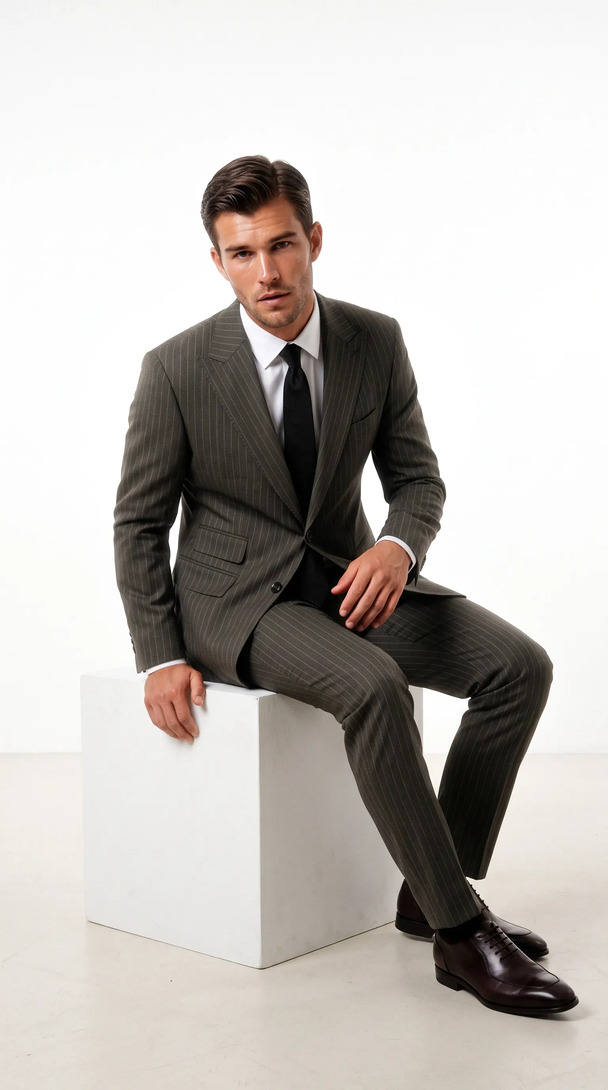
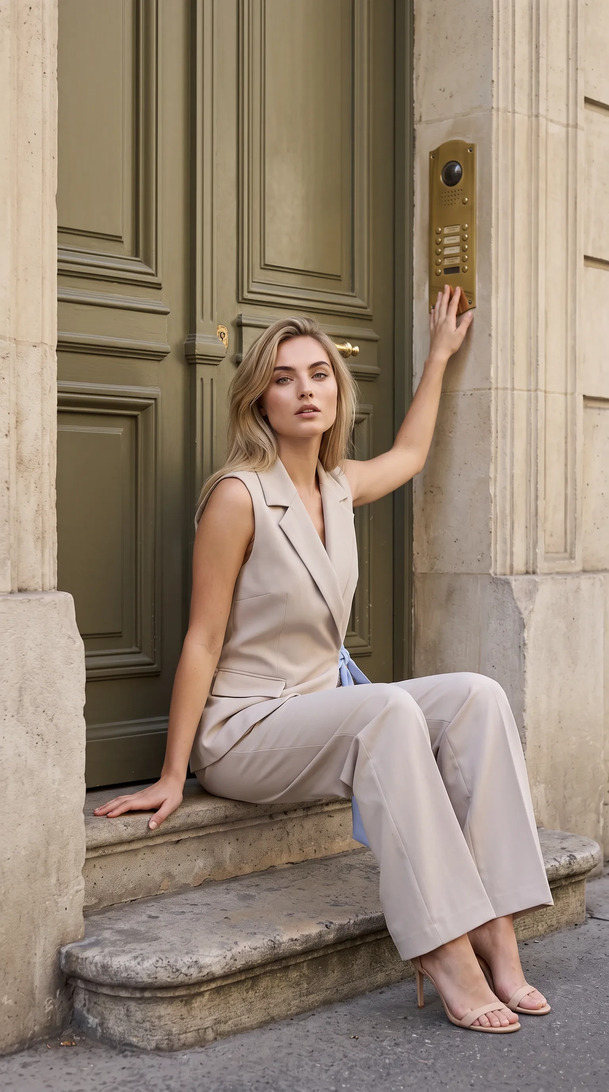
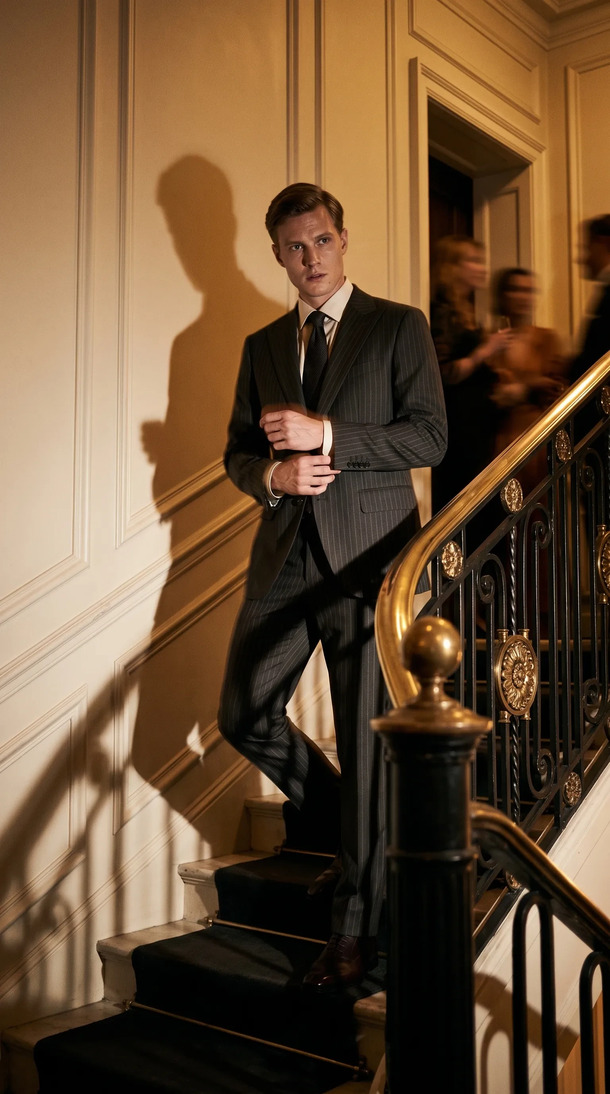
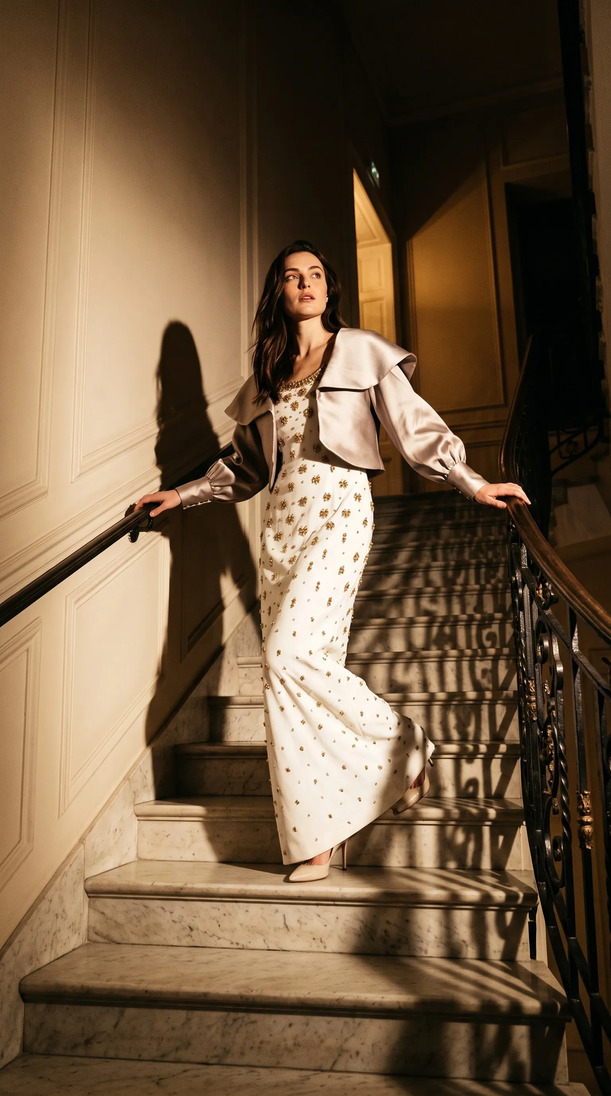
AI on-model product photography. A flat lay or packshot of a garment is placed on a photorealistic AI model. The output is an on-model product image, equivalent in visual quality to a studio photograph. This is the most commercially significant type for fashion brands: it replaces the shoot day entirely while converting 20-30% higher than flat lays or ghost mannequin shots.
Lifestyle product photography. The product is composited into a contextual scene: a handbag on a café table, a candle on a shelf, a jacket on a person in a park. The scene is AI-generated; the product is real. Output is closer to campaign photography than catalog photography.
Packshot and studio simulation. The AI generates a studio-quality packshot with controlled lighting, shadow, and reflection: the kind of image that requires a dedicated packshot studio in the traditional workflow. Useful for beauty, food and beverage, and general retail categories.
Generate your first on-model image today. Plans start at $19/mo. View pricing
AI Product Photography vs Traditional Studio: Honest Comparison
| Factor | Traditional studio | AI product photography |
|---|---|---|
| Production time | Days to weeks | Seconds to minutes |
| Cost per image | $50 to $500+ | Cents to dollars |
| Model booking | Required | Not required |
| Consistency across SKUs | Depends on team discipline | Automatic with brand kit |
| Creative control | Direct (human art direction) | High, but through prompts and parameters |
| Fabric and texture realism | Highest (physical photography) | Very high (2026 generation quality) |
| Platform format export | Manual | Automated |
| Volume scalability | Limited by shoot days | Unlimited, 24/7 |
The traditional studio still has an edge in one area: physical material rendering at the very highest end. The texture of a hand-woven fabric at macro scale, or the precise behavior of water-repellent coating on outerwear, benefits from physical photography.
For standard apparel and product categories at catalog scale, AI photography has closed the gap to the point where the output is commercially indistinguishable for most end uses. AI product photography is 40x faster than a traditional studio shoot and costs 1/3 as much. For brands operating at catalog scale, those numbers are the whole argument.
What AI Product Photography Can and Can't Do Today
Can do:
- Generate photorealistic on-model imagery from a flat lay in seconds.
- Maintain consistent model identity across an entire collection.
- Apply brand kit (palette, lighting style, background) automatically across all outputs.
- Produce platform-ready exports in every ratio for every major e-commerce and social channel.
- Generate social video (5 to 15 seconds) from static product images.
- Edit specific image elements with natural language ("remove the necklace," "change the background to stone," handled in two seconds).
- Operate 24/7 without studio scheduling constraints.
Can't do (yet, as of 2026):
- Perfectly simulate every exotic fabric behavior at macro scale (very fine mesh, multi-layer organza, custom prints with micro-detail).
- Replace creative direction entirely: the best outputs still benefit from human judgment about model selection, pose, and art direction.
- Produce physical samples or fit confirmation for technical pattern work.
- Replicate campaign-level editorial photography where the narrative complexity requires human creative collaboration.
The "can't do" list is shrinking every quarter. The "can do" list covers the operational needs of most fashion brands right now.
How Kayrae Uses AI for On-Model Product Photography
Kayrae is built specifically for fashion and e-commerce brands that need studio-grade on-model imagery at catalog scale, without a shoot day.
The workflow: upload a flat lay or packshot. Choose a model from 140+ AI models across body types, skin tones, poses, and heights. The platform dresses the AI model in the garment with accurate fabric drape simulation and photorealistic rendering.
Brand kit (palette, shoot style, product references, shoot history) is applied automatically so every image is on-brand without per-image art direction. Identity lock ensures the same model face and body carries consistently across an entire collection. Canvas edits are one-line prompts. Auto-export covers every major ratio and platform simultaneously.
Orchard and Co. replaced a three-person content team and a studio day. Kingbrich cut imagery costs by 70%. Norda Tekstil ships a whole catalog in a day. These are operational results from brands using AI product photography in production, not in testing.
Across the platform, brands have generated 48,000+ on-model images to date, with average delivery in roughly 30 seconds per garment.
Kayrae starts at $19/mo for Starter. Pro from $43/mo is the most picked plan. Studio from $80/mo handles high-volume catalog operations. Enterprise pricing is available. See full pricing.
Data privacy: your brand's designs are never used in pooled model training. Your kit is visible only to your brand. Only your brand's models see your kit. Kayrae uses no pooled training data across customers, so your brand identity stays private.
Sources
- On-model imagery converts 20-30% higher than flat lay (Pixelphant, 2024)
- 95.6% of top fashion brands use on-model photography (Pixelphant, 2024)
About Kayrae
Kayrae is an AI on-model product photography and video platform for fashion and e-commerce brands. The platform generates studio-grade on-model imagery from flat lay uploads in seconds, with 140+ AI models, brand kit consistency, identity lock, video generation (5-15s social clips), and auto-export for Shopify, Trendyol, Meta, TikTok, and Instagram.
- Platform: kayrae.ai
- Product: kayrae.ai/products
- Pricing: kayrae.ai/pricing (Starter $19/mo, Pro from $43/mo, Studio from $80/mo, Enterprise custom)
- Founder: Can Bayrak
FAQ
Is AI product photography legal for use on e-commerce platforms? Yes. AI-generated product photography is permitted on major platforms including Shopify, Amazon, Trendyol, and Meta, provided the imagery accurately represents the product. Misleading imagery (showing features or colors that don't exist) violates platform policies regardless of whether it's AI-generated or traditionally photographed. Accurate AI product photography has no legal distinction from accurate traditional photography on these platforms.
How do I know if AI product photography quality is good enough for my brand? Test with your actual products. Upload a flat lay and generate an output; evaluate whether it meets your quality bar before committing to a tool. Kayrae offers demos for this reason. The realism threshold for on-model AI has been crossed for most standard apparel categories; the question is whether a specific tool's implementation meets your specific brand standard.
Does AI product photography require any special input photography? A clean flat lay or packshot is sufficient. The background doesn't need to be white (Kayrae handles segmentation from any background). Resolution should be at least 1,000px on the short side for good output quality; 2,000px or higher produces the best results. Consistent lighting in the input helps the AI match fabric texture accurately.
Can AI product photography generate video as well as stills? Yes. Kayrae converts stills into 5 to 15 second social videos automatically, ready for TikTok, Instagram Reels, and Meta. The video output shares the same on-model imagery as the still, so your visual identity is consistent across static and motion formats.
See what AI product photography looks like with your actual products. No stock imagery, no placeholders.Book a demo and generate your first on-model image today.
Can Bayrak, Founder, Kayrae.ai